第八号当铺
Is the rapid growth of China’s emerging industries driven by industrial subsidies?: People’s Daily_我的网站

一 | 8月25日(星期二),今日报刊头条主要内容精华如下: 中国证券报 东方证券合并重组关键性进展 8月24日,东方证券召开2026年第二次临时股东会及2026年第一次A/H股类别股东会。
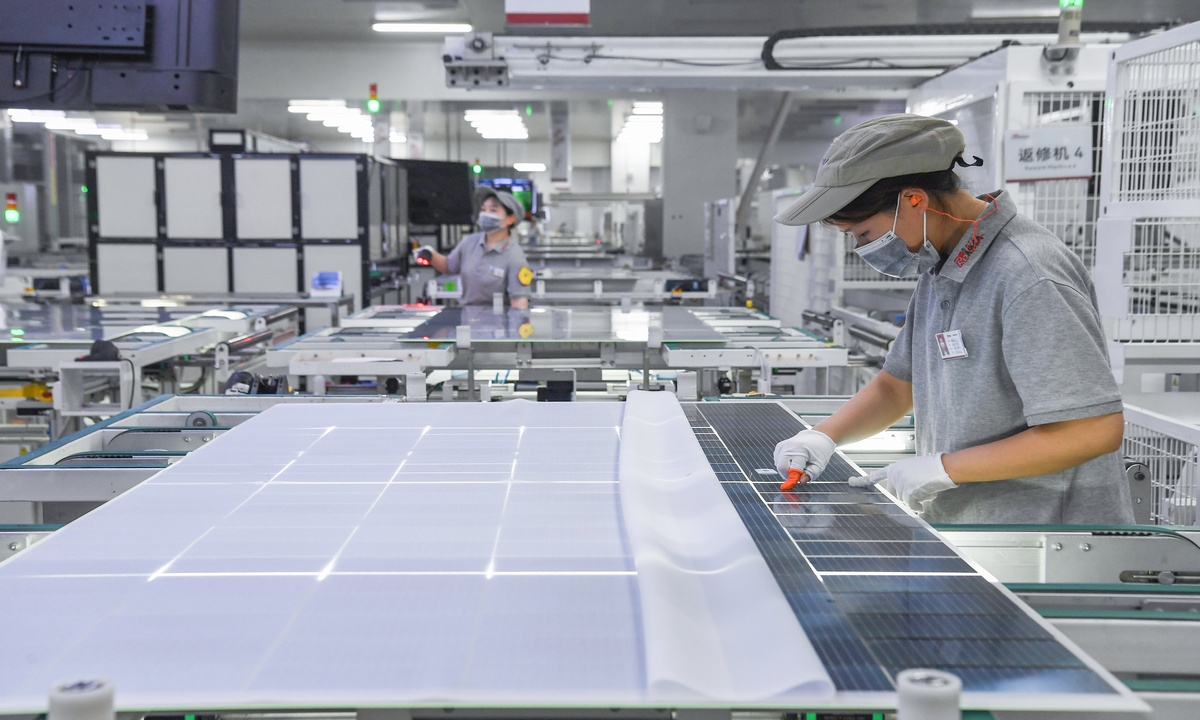
Workers assemble solar photovoltaic modules at a smart manufacturing workshop of Ronma Solar Energy Group in Jindong district of Jinhua city, East China's Zhejiang Province, on July 28, 2026. Photo: VCG
China saw robust exports in electric vehicles (EV), lithium batteries and photovoltaic products, known as the "new three," in the first half of this year. More notably, robotics, artificial intelligence (AI) and innovative drugs, which represent the future direction of industrial development, are also emerging as new calling cards for China's foreign trade.
However, the impressive performance provoked unease among some Western media outlets and politicians. Some have deliberately portrayed China's rapid industrial development and strong competitiveness as a result of government subsidies, pushing the false claim that subsidies have created overcapacity and those low-priced Chinese products are flooding global markets. Such fallacies, which simply equate industrial subsidies with overcapacity, are not only logically flawed but also factually groundless.
In practice, many countries adopt industrial policies tailored to their national conditions and development needs, such as providing research and development (R&D) subsidies for emerging industries and risk related subsidies for agriculture.
Well-designed industrial subsidies can help address market failures, promote technological innovation and environmental protection, reduce poverty and support balanced development, rather than cause so called "overcapacity."
Multiple reports by the United Nations Conference on Trade and Development have noted that the number of industrial policies worldwide has grown rapidly over the past five years, with R&D subsidies, tax incentives and low interest loans for emerging industries becoming common international practices.
Forcibly linking industrial subsidies to "overcapacity" is, in essence, a political manipulation based on double standards. The US, for example, plans to provide $750 billion in various subsidies from 2022 to 2031 under its Inflation Reduction Act. Subsidized EVs are subject to requirements such as production and sales in the US or North America, effectively excluding other WTO members. US industrial subsidies for AI are even greater than those of all other countries combined.
Similarly, according to incomplete statistics, the European Commission is expected to provide more than 1.44 trillion euros ($210 billion) in various subsidies between 2021 and 2030. The EU's Industrial Accelerator Act links local content directly to financial support through "Made in EU" requirements, creating serious investment barriers and institutional discrimination.
Have these massive subsidies been labeled as causing "overcapacity"? The answer is no. While claiming that China's industrial subsidies lead to so-called overcapacity, these countries are themselves providing massive subsidies to their own industries. Such double standards amount to selective accusations targeting China, aimed at politicizing trade and economic issues and weaponizing industrial policy.
At a deeper level, accusations that "China's industrial subsidies cause overcapacity" are merely a pretext, reflecting growing anxiety and fear over the rising competitiveness of Chinese industries.
Looking back at the repeated hype in Western media, the criticism has consistently targeted China's most globally competitive industries, including new-energy vehicles, photovoltaics and power batteries. This exposes the real intention of shifting the blame for their own lagging industrial development onto China while stepping up restrictions against Chinese industries.
China's breakthroughs in these industries have been driven by advances in homegrown technologies, complete industrial and supply chains, and robust market competition, rather than by policy subsidies as some have claimed.
In recent years, China has taken multiple steps to regulate and improve its subsidy policies, from reviewing and correcting inappropriate local subsidies to exploring a unified negative list mechanism for local fiscal subsidies. China applies subsidies equally to all market entities, including foreign invested enterprises, strictly follows WTO rules, and continues to improve the compliance, effectiveness and transparency of its subsidy policies.
Rather than fabricating and hyping baseless claims about subsidies and obsessing over building trade barriers, certain Western media outlets and politicians should focus on addressing their own weaknesses and increasing investment in research and development. They should embrace healthy market competition with an inclusive mindset, promote mutual benefit through greater openness, and win markets and drive progress through genuine innovation.
This was compiled and translated by the Global Times English edition based on an article published in the "Chisu Jinsheng" economic commentary column of the People's Daily on August 10, 2026.。

二 | 同日晚间,公司发布股东会决议公告,东方证券合并重组交易方案等系列议案经股东大会审议,均获高票通过。东方证券本次股东大会备受市场关注,参会股东投票热情高涨。

三 | 其中,东方证券2026年第二次临时股东会参会率达到66.43%,A股类别股东会参会率达到67.68%,H股类别股东会参会率达到55.53%。 国管公积金新政来了 职工符合申请住房公积金个人住房贷款(以下简称公积金贷款)缴存条件的,最高贷款额度分别为:1.购房家庭中1人为住房公积金缴存人的,购买首套住房公积金贷款最高贷款额度为120万元,二套住房公积金贷款最高贷款额度为100万元。2.夫妻双方均为缴存人的,购买首套住房公积金贷款最高贷款额度为240万元,二套住房公积金贷款最高贷款额度为200万元。

四 | 光模块三巨头全部“交卷” 8月24日晚,新易盛发布2026年半年度报告。上半年,公司实现营业收入209.1亿元,同比增长100.34%;归属于上市公司股东的净利润为75.29亿元,同比增长90.98%。新易盛二季度净利润为47.49亿元,一季度净利润为27.8亿元,据此计算,二季度净利润环比增长70%。 “国产GPU四小龙”之一 下周打新 8月24日晚,上交所网站披露上海燧原科技股份有限公司首次公开发行股票并在科创板上市发行安排及初步询价公告。

五 | 公告显示,燧原科技拟发行4303.5173万股,占发行后总股本10%,发行后总股本约4.3亿股。

六 | 网上、网下申购日为9月2日。

七 | 上海证券报 AI算力需求驱动业绩增长 光通信“易中天”扩产保交付 8月24日晚,新易盛披露半年报。

八 | 至此,A股光通信“易中天”组合上半年成绩单全部出炉。得益于全球AI算力基础设施建设持续提速,高速光通信产业链迎来业绩集中兑现期,中际旭创、新易盛、天孚通信三家行业龙头公司交出亮眼成绩单。

九 | 市场需求逐步放量 液冷领域并购案频发 8月24日晚,远东股份公告称,拟以2.16亿元现金收购惠州市富的旺旺实业发展有限公司(简称“富的旺旺”)80%股权,后者刚与另一家A股公司“分手”。这是今年以来A股公司在液冷领域的最新并购案。据统计,今年以来,已有20多家上市公司公告涉足液冷领域,既有产业协同式并购,也不乏“门外汉”的跨界并购。 央行三大流动性工具合力护航月末资金面 央行8月24日发布多个流动性管理工具操作公告。当日早间,央行公告,以固定利率、数量招标方式开展3400亿元7天期逆回购操作。傍晚,央行公告:将在8月27日至9月1日开展隔夜逆回购操作,每日操作量不超过6000亿元;8月25日将开展5000亿元MLF(中期借贷便利)操作。 美债“高烧” 沃什被“烤” 美国联邦政府债务总额已突破40万亿美元,在不到10年的时间里规模上涨了1倍。

十 | 当前,美国政府还在不断“借新还旧”为财政“续命”,这形成了一个越来越难以摆脱的负循环:债务规模越滚越大,利息支出水涨船高,财政赤字居高不下,财政部需要发行更多美债来弥补财政缺口。 证券时报 美国加码回购债券难挡定价权转移 久期风险加剧全球资产价格波动 美债市场的久期风险,已经成为当前全球资产定价的核心矛盾。所谓久期风险,是指利率上涨时,长期债券价格会大幅下跌的风险。

十一 | 上周美国财政部扩大长债回购操作,并未有效压制美债收益率,反而助推黄金、比特币开启 “货币贬值交易”。北京时间8月24日晚间,外媒报道称,美国财政部或动用近万亿美元财政部一般账户(TGA)资金回购债券。

十二 | 上海:“十五五”新增打造三个万亿级产业集群 上海“十五五”产业新图景发布。

十三 | 8月24日,《上海市加快推进新型工业化构建现代化产业体系“十五五”规划》(下称“规划”)公布。

十四 | 规划提出,到2030年,与上海城市功能和高质量发展相适应的工业经济综合实力进一步增强,为提升国际经济中心地位和全球影响力提供坚实支撑。智能化、绿色化、融合化发展取得重大进展,先导产业和新兴支柱产业构筑新动能新优势,未来产业加快成为新增长点,培育一批具有全球技术话语权的领军企业、先锋企业,辐射带动长三角形成若干世界级先进制造业集群,基本建成勇担国家战略、产品硬核高端、发展范式引领、产业生态优越的卓越智造之城。 时报观察 业绩说明会要从“有没有”升维“好不好” 上市公司半年报密集披露期来临,业绩说明会也迎来一波高峰。不过,近期部分上市公司的业绩说明会却接连上演“问实答虚”的错位戏码。互动里的“答非所问”让业绩会本该拆掉的资讯壁垒继续存在,阻碍了上市公司与投资者的有效沟通。 人形机器人运动会“炫技” 24只概念股业绩大增 当前人形机器人产业正处于从技术突破迈向规模化商业化的破晓时刻。8月22日晚,第二届世界人形机器人运动会在北京国家速滑馆“冰丝带”开幕。本届运动会共举行51个项目共1301场比赛,吸引666支队伍携2056台机器人参赛,竞赛项目、参赛队伍全面提质扩容,并新增跳远、举重、拔河、乒乓球等高强度对抗项目,在聚光灯下“炫技”。

十五 |  证券日报 央行今日开展5000亿元MLF操作 中国人民银行(以下简称“央行”)8月24日发布消息称,为保持银行体系流动性充裕,2026年8月25日,中国人民银行将以固定数量、利率招标、多重价位中标方式开展5000亿元MLF(中期借贷便利)操作,期限为1年期。 “沪八条”激活置换需求 上海银行业调整购房首付比例 8月24日,《证券日报》记者从多家银行以及房地产经纪公司人士处获悉,目前上海市的一些银行已按照上海市住房和城乡建设管理委员会等六部门联合印发的《关于优化本市房地产政策措施的通知》(以下简称《通知》,业内也称“沪八条”)要求,对购房首付比例进行调整。

十六 | 上半年锂矿企业业绩普遍向好 锂行业新一轮周期是否来临受关注 8月24日,广期所碳酸锂合约价格普遍上涨。其中,碳酸锂2701合约当日上涨1.6%,报收于15.89万元/吨,当日成交额达352亿元;碳酸锂2612合约当日上涨0.93%,盘中以16.23万元/吨的价格创本月新高。 年内A股超200起并购项目中途折戟 加速优质重组标的筛选 8月24日,广州智光电气股份有限公司、上海科泰电源股份有限公司(以下简称“科泰电源”)相继发布公告,宣布终止发行股份及支付现金购买资产事宜。类似的情形并不少见,纵观全年,A股上市公司并购重组交易中途终止已成为较为突出的市场现象。

十七 | 央广网 富临精工终止与德阳川发龙蟒17.5万吨磷酸铁锂项目投资合作 8月24日,富临精工(300432.SZ)发布公告称,公司已审议通过相关议案,拟终止与德阳川发龙蟒(002312.SZ)在绵竹市德阳—阿坝生态经济产业园落地的“17.5万吨磷酸铁锂项目”投资合作,双方将签署终止协议。据公告披露,前述合作协议签署后,合资公司尚未完成设立,且合作事项在实施路径、资源配置及决策效率等方面难以匹配项目快速推进的需求,经双方协商一致决定终止合作。 多家深市龙头大手笔派现 近500亿元现金“红包”在路上 上市公司半年报披露进入冲刺期,深市公司积极派发现金“红包”。数据显示,截至2026年8月23日,深市共176家上市公司已披露2026年半年度利润分配方案,合计拟发放现金股利490.48亿元,回报股东力度持续提升。 21世纪经济报道 小米连发三颗自研芯片 朱丹喊话友商“比一比” 8月24日下午,小米在北京召开玄戒芯片技术沟通会,小米集团副总裁、新业务部负责人朱丹发布了三款自研芯片:AI旗舰SoC玄戒O3、高带宽AI加速芯片玄戒O100、智驾高算力AI芯片玄戒D100。

十八 | 4000亿果链巨头公布上半年业绩 预告三季报 8月24日晚间,果链巨头立讯精密发布半年报,公司上半年营业总收入1745.04亿元,同比增长40.16%;归属于母公司所有者的净利润78.43亿元,同比增长18.04%;基本每股收益1.0774元,同比增长17.43%。 第一财经 防范AI支付风险 智能体支付应用自律公约落地 智能体支付让AI从“帮用户聊天”升级为“帮用户办事付钱”,这一产业实践正快速铺开。

十九 | 但随着各类实践落地,行业也暴露出诸多现实问题。8月24日,中国支付清算协会(下称“协会”)印发《智能体支付应用自律公约》(下称《公约》),明确开展智能体支付应用须遵守的原则及要求,引导会员单位坚守合规底线、强化风险防范、提升行业整体安全水平。 “易中天”半年报全部出炉:上半年共赚了223亿元 8月24日晚间,光模块厂商新易盛(300502.SZ)公布了上半年财报。至此,光模块概念股“易中天”上半年财报全部出炉。

| 据第一财经记者统计,上半年中际旭创(300308.SZ)、新易盛、天孚通信(300394.SZ)营收一共达到655.2亿元,净利润一共达到223.8亿元。 经济参考报 积存金价格集体站上千元关口 黄金投资热度升温 8月24日,多家银行积存金价格突破1000元关口。

| 记者梳理发现,截至24日下午16时35分,建设银行积存金报1004.36元/克,工商银行积存金报1001.21元/克,农业银行积存金报1020.21元/克,中国银行积存金报1018.22元/克。 央行调控更精准灵活 货币政策价格型工具持续丰富 8月24日,中国人民银行发布公告,将在8月27日至9月1日开展隔夜逆回购操作,采用固定利率、数量招标,每日操作量不超过6000亿元。此外,央行8月25日将以固定数量、利率招标、多重价位中标方式开展5000亿元中期借贷便利(MLF)操作,期限为1年期。

| 专家表示,近期央行市场调控愈发精准灵活,货币政策工具箱“价格型”工具持续丰富,货币政策框架转型正在加速。(文章来源:东方财富研究中心)。
Current article:http://ftq.aiwengchuanzuodahuai.shop/news/20260826_372944.html
Published on:07:41:24